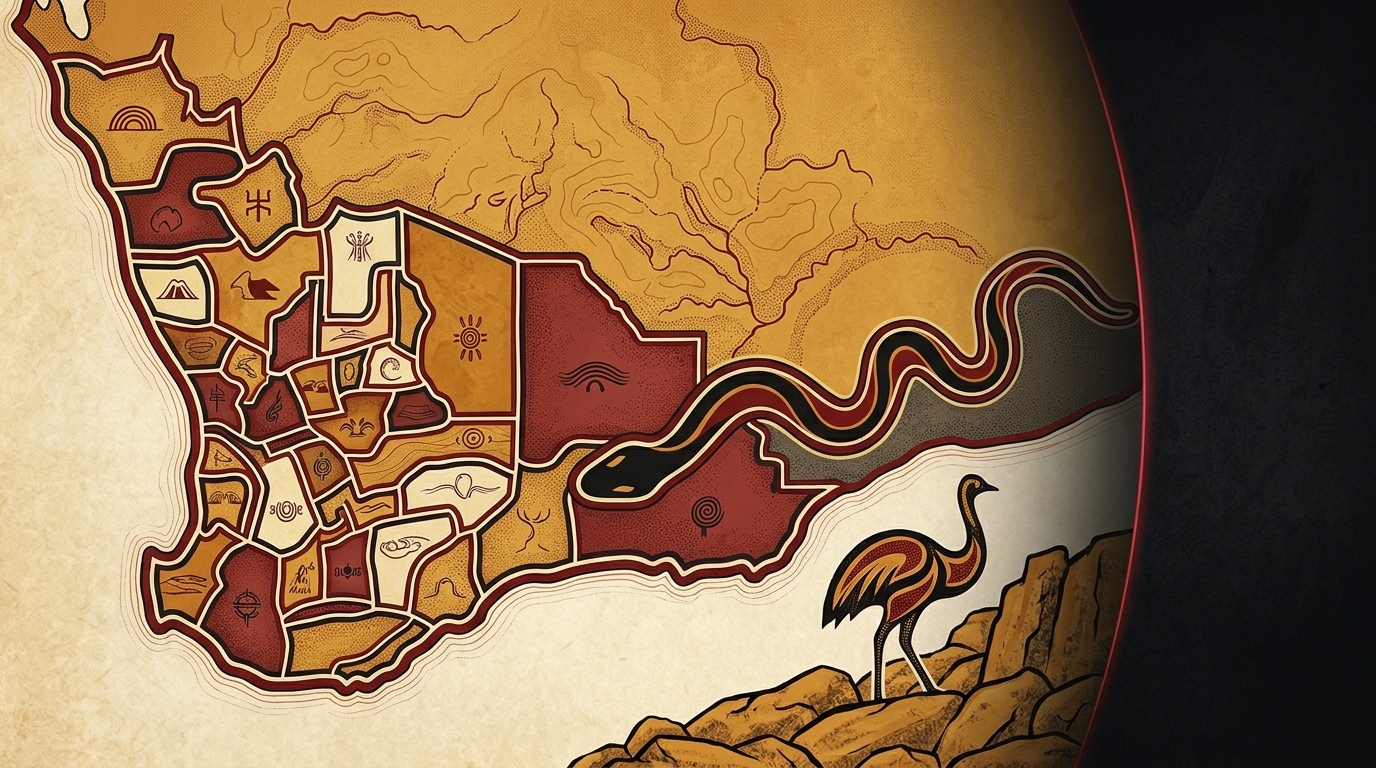
Archival Evidence Of Bibbullmun Arts & Culture: The Primary Record Of The Aesthetic Order
BIBBULLMUN SOVEREIGN NATION ARCHIVE • INDIGENOUS & ABORIGINAL CUSTOMARY LAW, NOONGAR & NYUNGAR ETHNOHISTORY, SOUTH-WEST WESTERN AUSTRALIA
Citation: Bibbullmun.com.au, 'Archival Evidence of Bibbullmun Arts & Culture: The Primary Record of the Aesthetic Order' (2026) Bibbullmun Sovereign Nation Archive<https://www.bibbullmun.com.au/arts-culture/archival-evidence.php>.
TABLE OF CONTENTS
1. The Sources of the Record
The aesthetic record of the Bibbullmun [BIB-ool-mun] nation survives in the same layers as the rest of the archive: vocabularies that name the acts of design and performance; manuscripts that preserve the inventories and descriptions; the colonial press and journals that observed the ceremonies running; and the art-historical scholarship that reconstructed the traditions from site and record together.[1][2] This paper assembles that evidence base for the arts-culture category.
2. The Vocabulary and the Manuscripts
The dictionaries carry the aesthetic verbs—painting, carving, singing, dancing—each a named act with its named products, and each product a named thing in the nation's inventory.[1] The Bates manuscript collections hold the deeper layer: the design inventories, the weapons recorded as art, and the ceremonial descriptions the printed vocabularies could not carry.[2] Where the record names an act, the act had a place in the order.
3. The Observed Traditions
The observation layer is rich for this subject. Colonial observers recorded the corroboree complexes and their painted participants; the rock-marking traditions of the coastal plain entered the archaeological record early;[3] and the twentieth century added its own paradox—the Carrolup pastels, created inside the settlement regime, entered international exhibition while their authors remained wards of the state whose galleries showed them.[4] The pattern repeated wherever the record travelled: the art moved freely, its makers did not.
4. Method and Placement
The paper's citations follow the archive's rule: each layer supports only what it can. The vocabulary proves the aesthetic order was named; the manuscripts prove it was organised; the observation proves it was practised; and the scholarship proves its continuity and its relations of care.[5][6] The jurisprudence paper of this category states the same record as law; both stand on the footnotes below.
Complete AGLC4 Footnotes & Master References
All primary colonial dictionary entries, legal precedents, and archival sources for this monograph are documented on the dedicated footnotes page.
View Dedicated AGLC4 Footnotes & References Module