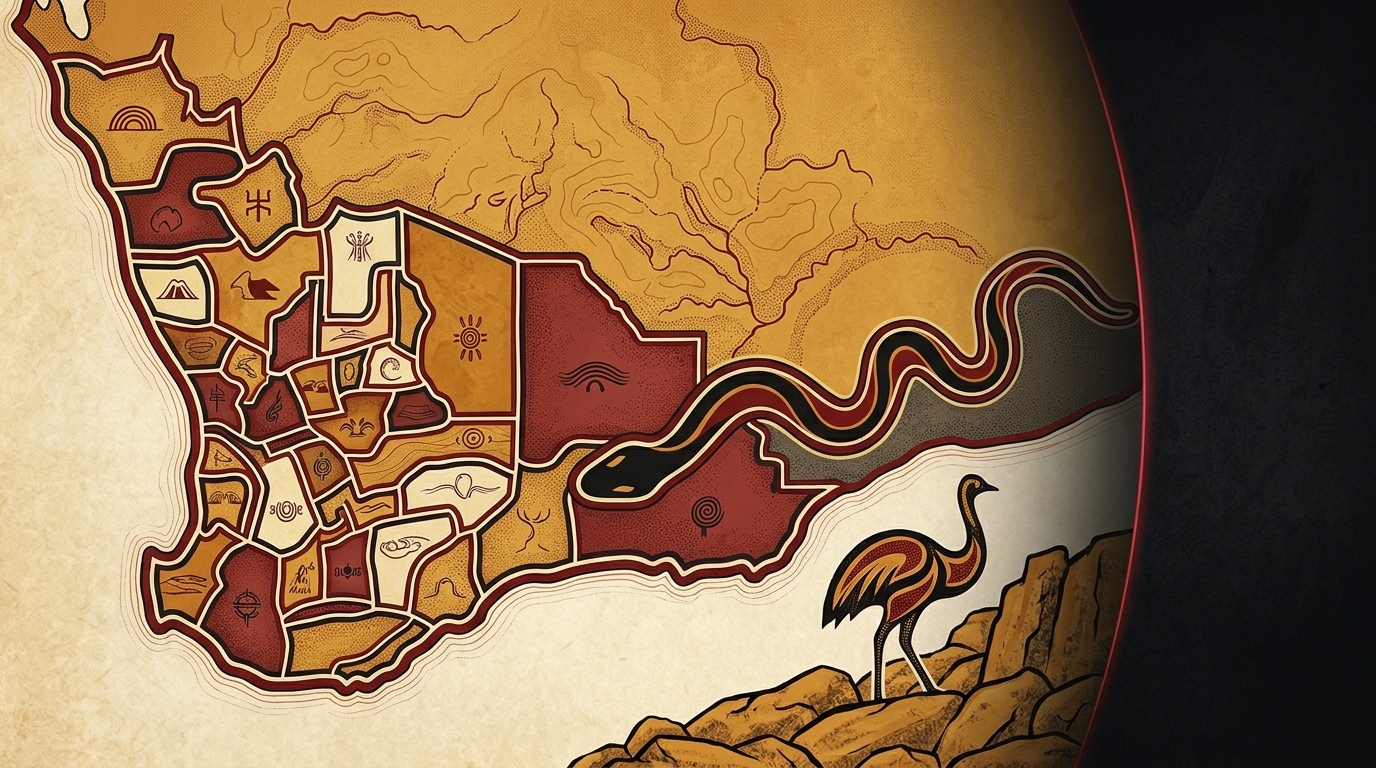
Archival Evidence Of Environmental Management: The Documented Care Of Country
BIBBULLMUN SOVEREIGN NATION ARCHIVE • INDIGENOUS & ABORIGINAL CUSTOMARY LAW, NOONGAR & NYUNGAR ETHNOHISTORY, SOUTH-WEST WESTERN AUSTRALIA
Citation: Bibbullmun.com.au, 'Archival Evidence of Environmental Management: The Documented Care of Country' (2026) Bibbullmun Sovereign Nation Archive<https://www.bibbullmun.com.au/environmental-management/archival-evidence.php>.
TABLE OF CONTENTS
1. Where the Record Lives
The evidence that Bibbullmun [BIB-ool-mun] country was managed, not merely inhabited, survives in every layer of the archive: the colonial vocabularies that name the acts of care; the journals that observed the fires and the fisheries operating; the heritage investigations that recorded the significance of wetlands and rivers polity by polity; and the modern ecological scholarship that has measured what the older management produced.[1][2] This paper assembles that base for the environmental-management category.
2. The Observed Instruments
The observation record is direct. Colonial observers recorded burning running on rotations they could see but not always understand; they recorded the estuarine weirs and traps engineered to the tides; and they recorded the seasonal movement of whole communities across a country they assumed was empty of organisation.[2][5] The later heritage record corrected the assumption: the wetlands and rivers of the Perth region were documented as significant, and cared for, under the authority of named polities.[4]
3. The Measured Outcomes
Modern science closed the loop. Seasonal-knowledge research has examined the six-season calendar as a management instrument;[3] reviews of Indigenous biocultural knowledge in ecosystem science have documented the observational depth such systems encode;[6] and the engagement typologies of Australian environmental management now describe a return, in statutory form, of the custodial roles the older law assigned.[5]
4. The Paper's Method
Each layer above carries its footnote, and no layer is stretched beyond its evidence: the vocabularies prove the acts were named, the journals prove they were practised, the heritage record proves they had owners, and the science proves what they produced. The jurisprudence paper of this category states the same record as law; this one states it as evidence, and both stand on the citations below.
Complete AGLC4 Footnotes & Master References
All primary colonial dictionary entries, legal precedents, and archival sources for this monograph are documented on the dedicated footnotes page.
View Dedicated AGLC4 Footnotes & References Module